
1. The “Gas Management” Challenge in Grain Storage
Grain storage faces persistent risks from pests and mold. Traditional chemical fumigation methods are not only harmful to the environment and human health but also grow increasingly ineffective as pests develop chemical resistance. In response, green grain‑storage technologies are being rapidly adopted.
Among these solutions, nitrogen‑modified controlled‑atmosphere storage has proven highly efficient. More than 55 million tonnes of grain are preserved using this method nationwide, cutting storage losses to below 1%.
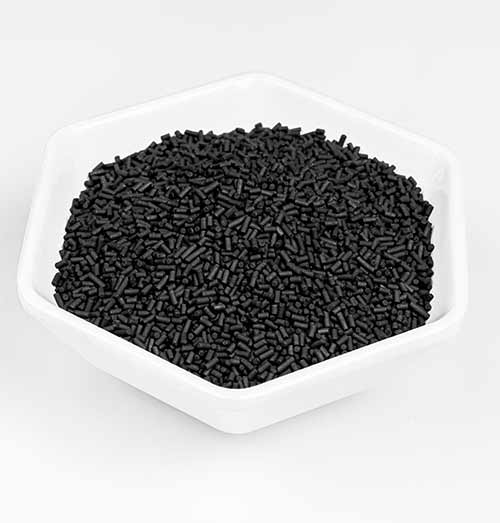
Carbon molecular sieve (CMS) delivers a clean, cost‑effective solution: it separates high‑purity nitrogen from ambient air at room temperature, with no chemicals or liquid waste generated. This allows on‑site nitrogen generation for granaries, making CMS a cornerstone of modern, eco‑friendly grain preservation.
2. How Carbon Molecular Sieve Works
CMS is a porous material equipped with precisely sized micropores that function like a molecular “sieve”. When compressed air flows through the material, smaller oxygen molecules are preferentially adsorbed by CMS, while slightly larger nitrogen molecules remain in the gas phase and become concentrated — achieving gas separation.
This is a purely physical adsorption process with no chemical reactions taking place. No chemical reagents are consumed, and no waste liquids are produced. Once saturated, CMS can be regenerated simply by pressure reduction: the adsorbed oxygen is released, and the material is restored for repeated use.
Conventional PSA (Pressure Swing Adsorption) systems adopt two adsorption towers working in an alternating cycle. One tower adsorbs oxygen to produce nitrogen, while the other undergoes depressurization for regeneration. Automatic valve switching guarantees a continuous nitrogen supply. For grain depots, this translates to low consumable costs, zero liquid waste, a compact footprint and on‑site nitrogen production — an economical and environmentally sustainable technology.
3. Typical Applications of Carbon Molecular Sieve in Grain Storage
3.1 Application Scenario: Nitrogen‑Controlled Atmosphere Storage – Turning Granaries into “Green Safes”
For grain storage, CMS acts as the core functional material inside PSA nitrogen generators. Using compressed air as feed gas, the dual‑tower system delivers continuous nitrogen output. High‑purity nitrogen is then transported through piping networks into sealed silos, building a nitrogen‑rich, low‑oxygen storage atmosphere. After maintaining this condition for a set duration, pests suffocate and die, and mold growth is suppressed. Safe, chemical‑free grain preservation is therefore realized.
3.2 Key Advantages Over Traditional Chemical Fumigation
3.2.1 Green & Environmentally Friendly
Traditional fumigation relies on toxic chemicals such as phosphine. Although effective, these substances require strict safety protocols and may leave harmful residues. In addition, long‑term application has triggered strong pest resistance, which forces higher dosages and raises operational safety risks.
CMS‑powered PSA nitrogen generation adopts a fully physical principle. Inert nitrogen displaces oxygen, dropping oxygen concentration below the survival threshold for pests, without introducing any external chemicals. No residues will remain on grain, safeguarding food safety from the source. Since this technology disrupts pest respiratory metabolism, pests cannot develop genetic resistance as they do against chemical pesticides. Its pest‑control effect is long‑lasting and reliable, making it a truly eco‑friendly and sustainable grain‑storage solution.
3.2.2 Cost‑Effective
Systems built around CMS present obvious economic benefits in daily operation:
Raw materials are free — only atmospheric air is required. Regular purchases of fumigants such as phosphine or carbon dioxide are completely eliminated.
Power consumption mainly comes from electricity. CMS features a long service life; only low‑cost spare parts (e.g., air filters) need periodic replacement.
By contrast, chemical fumigation brings recurring expenses for pesticides. Post‑fumigation forced ventilation consumes large amounts of electricity, alongside heavy and time‑intensive manual labour.
When all factors — raw materials, energy, labour and time — are taken into account, PSA nitrogen generation delivers better long‑term economic returns.
3.2.3 Rapid Response
Timely operation is critical for grain management. Conventional fumigation follows a lengthy workflow: chemical requisition, protective equipment preparation, silo sealing, dosage injection, days‑long exposure, ventilation and residual concentration testing. The whole procedure often takes one week or longer. Once abnormal temperatures or pest outbreaks occur, slow intervention may aggravate grain losses.
CMS‑based PSA systems support plug‑and‑play operation. High‑purity nitrogen can be generated within minutes after startup, with no preheating or lengthy preparation. Operators can react immediately to real‑time monitoring data, quickly lowering oxygen levels to inhibit pests and fungi. After treatment, simple ventilation restores normal warehouse operation. Silo downtime is greatly shortened, improving the overall turnover efficiency of grain facilities.
3.2.4 Stable & Adjustable Nitrogen Quality
Preserving grain quality carries equal importance to reducing quantity losses. CMS nitrogen generators can continuously supply nitrogen with adjustable purity ranging from 95% to 99.999%. Operators are able to customize the controlled atmosphere for different grain varieties (rice, wheat, corn, soybeans) and seasonal storage demands.
Moreover, the generated nitrogen has a low dew point, meaning it stays extremely dry. When injected into grain piles, this dry, high‑purity nitrogen not only displaces oxygen but also stabilizes micro‑humidity inside the bulk grain. It inhibits mold spore germination and aerobic microbial activity, effectively slowing down grain quality degradation during long‑term storage.
4. Industry Support & Future Outlook
The fast‑growing adoption of nitrogen‑controlled atmosphere storage is backed by a mature domestic CMS manufacturing industry. China has formed leading industrial production clusters, with Chizhou Shanli Molecular Sieve Co., Ltd. as a key representative enterprise. Shanli CMS products are widely applied in the preservation of grain, food, fruits, tea leaves and Chinese herbal medicines.
In terms of performance, premium CMS delivers high nitrogen yield, a low air‑to‑nitrogen ratio, low operating costs and an extended service life. Under standard working conditions, high‑quality CMS can last for 8 to 10 years.
Conclusion
Carbon molecular sieve cannot produce grain directly, yet it is an indispensable core material for nitrogen‑controlled atmosphere pest prevention and grain preservation — a fundamental pillar for green grain warehousing. Featuring room‑temperature operation, chemical‑free treatment, a compact layout and reusability, CMS plays a vital role in securing national food security and promoting the shift toward sustainable grain‑storage practices. Powered by advanced functional materials, every single grain can rest safely in granaries for longer periods.
Please click www.carbon-cms.com. Reach out to us if you need further guidance for carbon molecular sieve application.
Continue lendo, fique por dentro, assine e sinta-se à vontade para nos dizer o que pensa.

Direitos autorais
@ 2026 Peneira molecular Co. de Chizhou Shanli, Ltd. Todos os direitos reservados.
 SUPORTADO POR REDE
Hi! Click one of our members below to chat on